
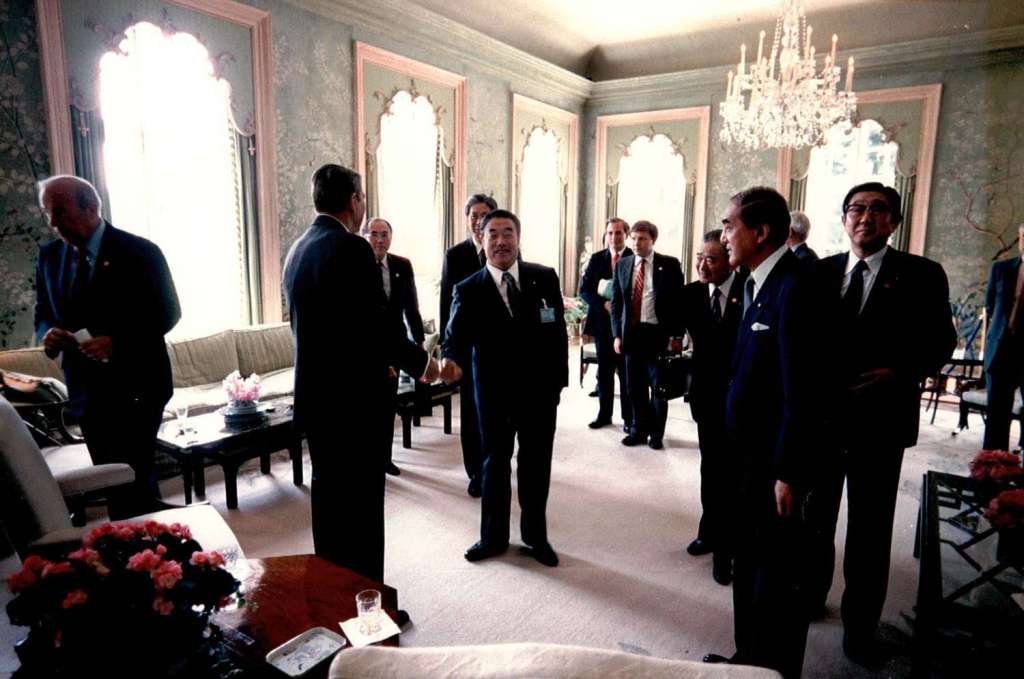
By the mid-1980s, the United States was running a massive trade deficit, largely driven by a strong dollar that made American exports uncompetitive globally. In 1985, finance ministers from the US, UK, West Germany, France, and Japan met at the Plaza Hotel in New York and agreed to intervene in currency markets to deliberately depreciate the dollar. For Japan, this meant allowing the yen to appreciate dramatically, nearly doubling in value against the dollar between 1985 and 1987.
To offset the economic shock of a stronger yen, the Bank of Japan cut interest rates, flooding the economy with cheap lending. The result was one of the most extreme asset bubbles in economic history. Japanese real estate and stock prices skyrocketed through the late 1980s, with the land under the Imperial Palace in Tokyo famously estimated to be worth more than all of California. When the Bank of Japan raised rates in 1989 to calm the bubble, the market collapsed instantly.
Japan entered what economists now call the Lost Decade, a prolonged period of stagnation, deflation, and banks kept alive by government support. The crisis accelerated the rise of South Korea and Taiwan as alternative manufacturing hubs and created a vacuum that China would later fill as the region’s dominant economic power. Japan’s policy failures also became required reading for central banks worldwide on the dangers of asset bubbles and deflationary spirals.
The Plaza Accord is a cautionary tale about how a single diplomatic agreement between powerful nations can reshape an entire region’s economic fate for decades. Japan’s Lost Decade demonstrated that even the world’s second-largest economy was not immune to the consequences of unchecked speculation, and its aftermath directly accelerated the broader shift in Pacific Rim economic power that defines the region today.

 Spykman Institute
Leave a comment