
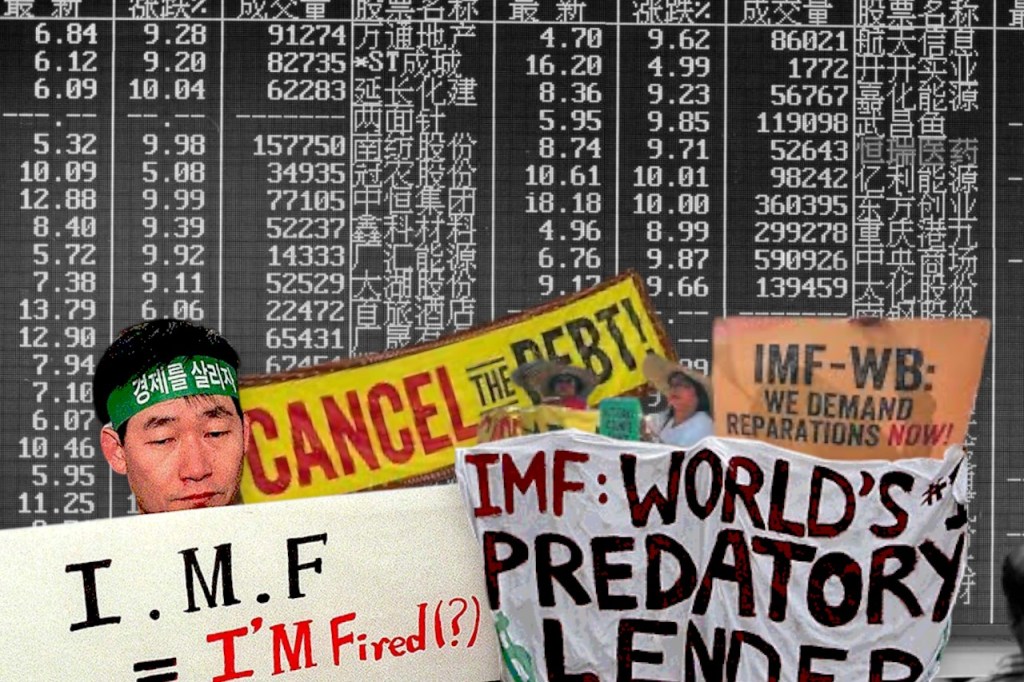
In the early 1990s, Thailand’s fast economic growth was (unsustainably) sustained by massive foreign debt and a property bubble, protected by a fixed exchange rate that pegged the value of the Baht relative to the USD.
However, the Thai government was forced to float the Baht when investors realized the government didn’t have enough foreign reserves to make good on its Baht-USD exchange rate.
The currency plummeted instantly, losing nearly 20% of its value in a single day and popping the speculative property bubble. The crisis quickly spread to Indonesia, South Korea, and Malaysia as investors fled the East Asian region.
In response, the IMF provided $17B in bailouts but mandated government austerity and high interest rates on receiving nations.
These conditions remain controversial in the history of economic policy, as they stabilized Asian currencies but directly caused severe domestic recessions that plunged entire nations into intense poverty.
A combination of dependence on foreign investors and irresponsible policymaking caused the economic crisis. In response, Pacific Rim nations restructured their economies towards self-reliance and long term sustainability.
For example, the Chiang Mai Initiative Multilateralization (CMIM) was established as a currency swap network that could stabilize the region without Western influence from bodies like the IMF.
The 1997 Asian financial crisis was a critical warning for developing nations around the world against apparently booming economic growth without a sustainable foundation, whether that be ample foreign reserves or properly valued markets.
There are always warning signs for economic disaster, no matter how unlikely it may seem!

 Spykman Institute
Leave a comment