What did the United States threaten to bomb in Iran on April 7th unless the Strait of Hormuz was reopened?
- Nuclear power plants
- Military bases
- Bridges and power infrastructure
- Oil refineries
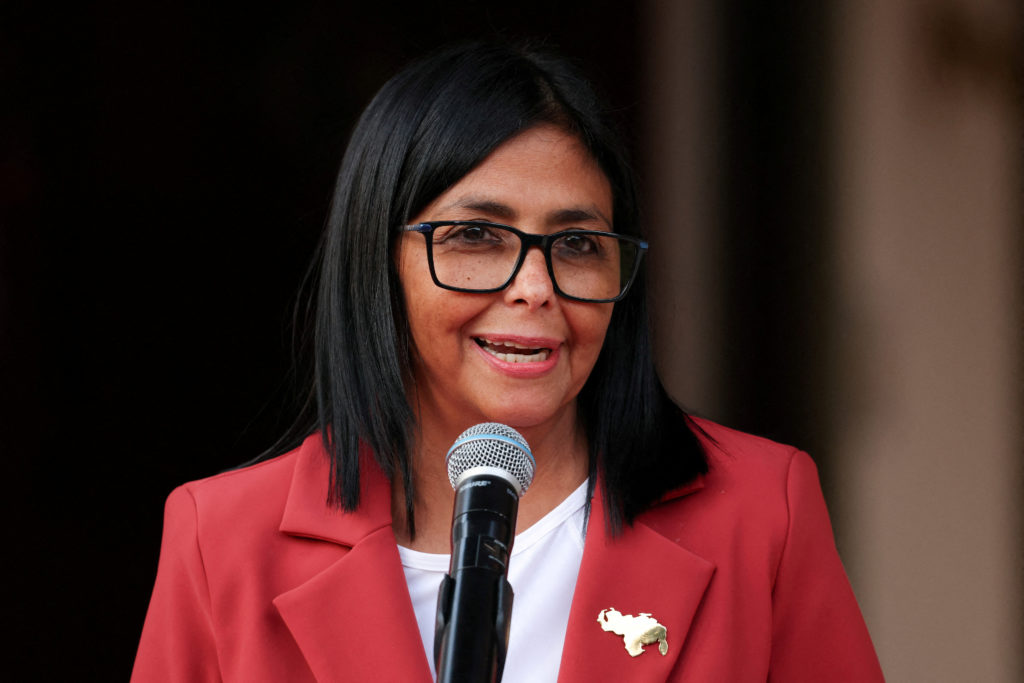
On April 1st, the United States removed OFAC sanctions on which prominent Latin American figure?
- Delcy Rodriguez, interim president of Venezuela
- Miguel Diaz-Canel, president of Cuba
- Claudia Sheinbaum Pardo, president of Mexico
- Luiz Inácio Lula da Silva, president of Brazil
What action did Cuba take on April 3rd following talks with the United States?
- Opened itself up to international trade
- Sent a Cuban diplomat to the United States
- Gave the United States thousands of dollars in reparations
- Released thousands of prisoners
What group did New Zealand’s Electoral Amendment Act ban from voting ahead of the November 2026 election?
- Non-citizen residents
- Dual citizens
- Convicted prisoners
- Citizens living abroad
During wildfire operations in March 2026, what did a South Korean Army helicopter accidentally do?
- Crash near the border
- Enter North Korean airspace
- Enter the DMZ buffer zone
- Strike a civilian communications tower
What did China announce it would ban for children on digital platforms?
- Social media accounts entirely
- Addictive digital services
- Foreign-produced content
- Online purchases
Answers
- 3: Bridges and power infrastructure. The United States threatened to bomb Iran’s bridges and power infrastructure by April 7th if it didn’t reopen the critical Strait of Hormuz, warning that “a whole civilization will die tonight.” In response, Iranian officials refused negotiations and advised citizens to form human chains around power plants to resist the United States.
- 1: Delcy Rodriguez, interim president of Venezuela. On April 1st, the United States removed OFAC sanctions on Delcy Rodriguez. Rodriguez celebrated the act as “a significant step in the right direction to normalize and strengthen relations between our countries.”
- 4: Released thousands of prisoners. On April 3rd, Cuba released over 2,000 prisoners as a “humanitarian and sovereign gesture” following talks with the United States. A statement from Cuba declared that a prisoner’s eligibility for release was dependent on their conduct in prison, the severity of their offense, their health, and the length of their remaining sentence.
- 3: Convicted prisoners. New Zealand’s Electoral Amendment Act, taking effect ahead of the November 2026 general election, banned prisoners from voting. The law also restricted voter enrollment to 13 days before polling day. Opposition parties including Labour, the Greens, and Te Pāti Māori condemned the changes as voter suppression disproportionately targeting younger and Māori voters.
- 3: Enter the DMZ buffer zone. A South Korean Army Surion helicopter accidentally entered the DMZ buffer zone on March 23 while assisting wildfire operations in Yeoncheon. The incident was classified as an unintentional navigation error rather than a provocation.
- 2: Addictive digital services. China moved to regulate digital humans and ban addictive services for children as part of a broader push to control the country’s technology sector. The regulations target features designed to maximize engagement and screen time among minors, continuing a regulatory pattern that began with China’s earlier restrictions on gaming hours for players under 18.
 Spykman Institute
Leave a comment