
In the early 2010s, the city of Ferguson, Missouri’s behavior could only be described as systemic financial parasitism. A 2014 Department of Justice report found that the city’s budget was maintained in large part by emptying the ragged pockets of its poorest citizens.
An unceasing barrage of traffic tickets, court fees and fines kept the city running “smoothly.” Citizens convicted of petty crimes were forced to pay for their own public defenders, ankle monitors, and had hefty fees imposed upon them with two options: pay, or go to jail.
In her essays, Jackie Wang explains this phenomenon as Carceral Capitalism, demonstrated when a governmental institution uses the justice system to exploit citizens as a source of profit. Driven by a municipal profit incentive, Ferguson’s police department issued 90,000 citations in four years, more than four per resident in a city of just 21,000.
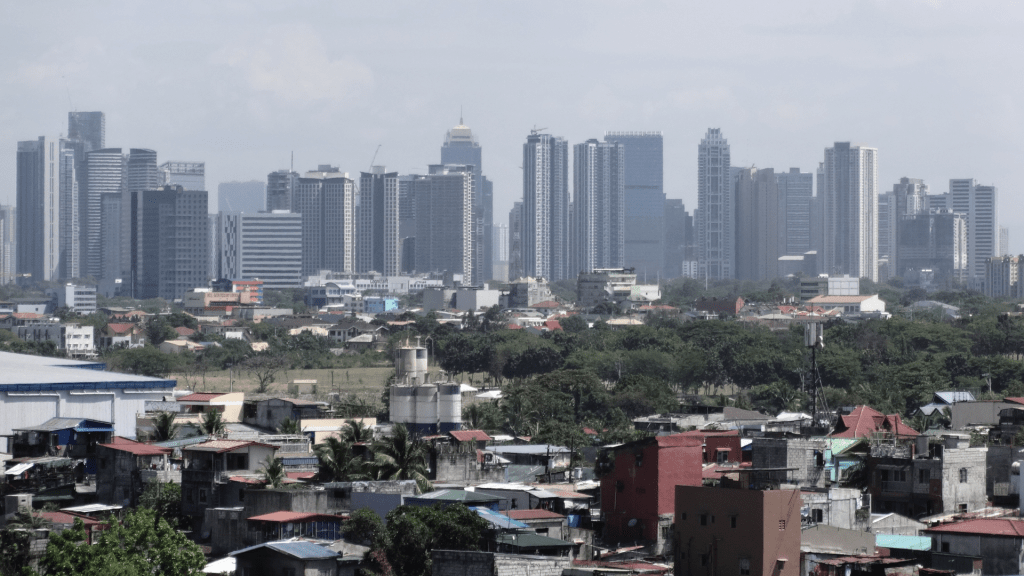
Yet, the fees and fines of Carceral Capitalism are only harmful symptoms of a deeper-rooted governmental disease, one that extends far beyond American borders. In the impoverished communities of Manila, Philippines, citizens are not exploited by fines but rather acts of land dispossession through forced evictions. Clearing out marginalized citizens makes way for the construction of luxury condos that bring attractive investments to Manila’s municipal government.
Similar to the city of Ferguson, Manila abuses legal codes like eminent domain, the legal power of governments to seize private property for public use to evict entire communities in the “public interest.” This spatial apartheid, separating “desirables” from “undesirables,” relegates those without political clout to marginal locations while converting the city center into investor hotspots.
While the methods of wealth extraction differ in contrasting economic and cultural contexts, whether it be land dispossession or Jackie Wang’s punitive state, the underlying cause remains strikingly similar. When municipalities become financially dependent on profit-driven institutions, their primary constituents cease to be the people seeking refuge under their watch.
In Ferguson, the city government found itself strapped for cash because the Hancock amendment of Missouri law limited the city’s ability to raise tax rates. To build city infrastructure, they instead turned to municipal bonds sold to financial institutions. Critical to the solvency of the city’s plan to use bonds was low interest rates, which were guaranteed by maintaining high credit ratings.
These ratings, as determined by agencies like the S&P or Moody’s, required “stable and diverse revenue streams.” When the city found itself lacking in financial capacity to continue infrastructure development and paying off bonds, they made a simple choice: choose to service its debt to corporations instead of servicing its citizens. The municipal court system became a tool to satisfy the city’s budget requirements. Effectively, the city transferred the brunt of its debt to be borne by its people.
In Manila, foreign investment is seen as a top priority of the municipal government. Researchers from the National University of Singapore and UP Manila describe their approach as neoliberal urban development, one that prioritizes market growth over public service. A key element of this growth comes from “beautifying” and improving the infrastructure of the city.
However, just as the Hancock Amendment limited Ferguson’s ability to raise money, Manila was heavily restricted by austerity programs mandated by the IMF and World Bank which came with national development loans. These programs prohibited heavy public expenditures, making privatization the only viable option across core sectors of infrastructure building.
Without adequate funding, Manila was forced to turn to international loan sharks. The city entered into Public-Private Partnerships (PPPs) with numerous conglomerates including Ayala Land and SM Prime to build the infrastructure needed to attract foreign investment.
Just like in Ferguson’s scenario, the interest rate on the loans included in these partnerships depend heavily on the city’s credit rating. For PPPs, this credit rating is dependent on the city’s ability to fulfill an Internal Rate of Return (IRR), which determines the profitability of a project based on how much the perceived value increases. However, impoverished communities in Manila have no worth to investors in London or New York.
To maintain its credit rating, the Manila government had to clear out the “deadweight” to make way for high-rises and luxury malls which would maintain its good credit. The human right to adequate housing is literally calculated as a market risk. When the dignity of Manila’s impoverished people becomes an obstacle to unchecked profit, refusing to evict them is evaluated as a rise in investor risk. Manila’s financialization is inherently dehumanizing.
This neglect presents an inherent contradiction in the purpose of a city. Edward Glaeser, a Professor of Economics at Harvard University explains what should be common sense: “Cities don’t make people poor; they attract poor people with the prospect of prosperity. The ultimate purpose of a city is to enable the human interactions that lead to innovation, wealth, and cultural progress.”
The enablers a city provides includes public goods like mass transit, public parks, and libraries that provide invaluable infrastructure for economic growth, and social welfare that brings up marginalized populations and offers economic opportunity.
However, when cities’ decision-making becomes dangerously tied to the financial interests of its creditors, they do the precise opposite of what Edward Glaeser argued for: they make people poor. Instead of providing opportunity, municipalities become predatory and operate with the sole purpose of extracting capital from its citizens, which is often easiest to do to those with lower socioeconomic status and minimal political power.
Ferguson and Manila made risky investments with creditors, and when those risks escalated into financial troubles, the risk wasn’t absorbed by the municipal governments, but rather passed onto the constituents least equipped to bear it.
A city prioritizing financial institutions’ goals has failed in its sole purpose of serving its people. The endemic presence of financialization in municipalities has infected cities across the Pacific Rim, whether it originates from greed, corruption, or fiscal mismanagement. The most effective method of challenging extractive practices, whether that be the carceral state in America or totalitarian “land rights in Asia,” is targeting the root cause of municipal exploitation: financialization.
A city’s people aren’t statistics. They aren’t revenue sources. And they most certainly should be directly served by the cities that represent them. Yet, until municipalities are reclaimed from creditors, governments will continue to treat citizens as less than human.


 Spykman Institute
Leave a comment