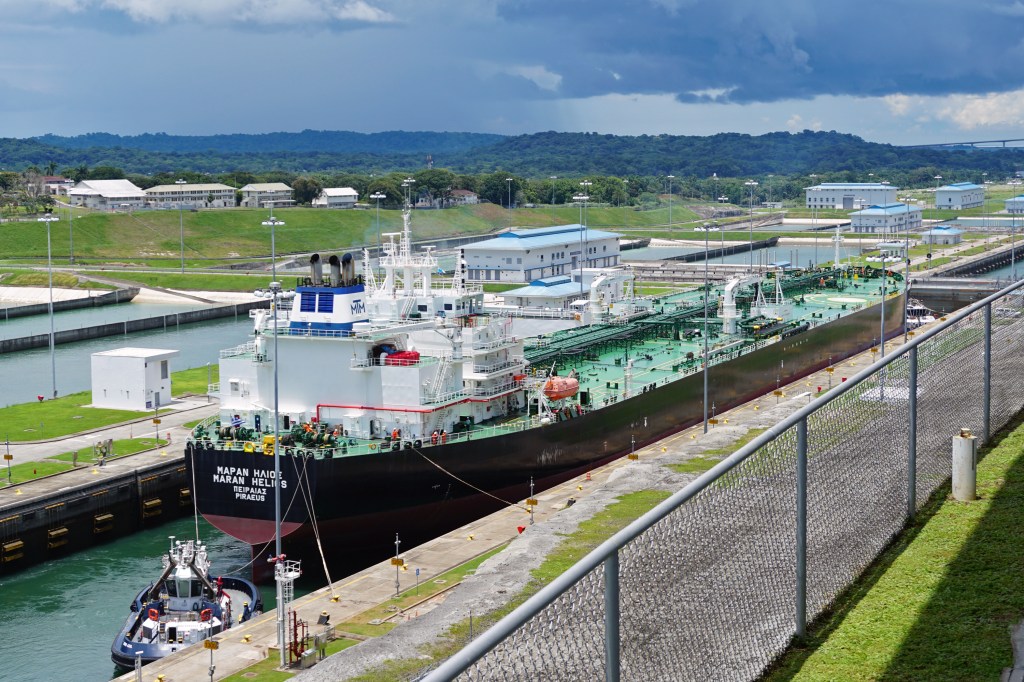
In 1903, U.S. President Theodore Roosevelt proposed a treaty to Colombia to secure the rights to build the Panama Canal. When negotiations fell through, the US backed a successful Panamanian independence movement and secured the Hay-Bunau-Varilla Treaty through the new administration, gaining permanent control over the canal for only $10 million.
For decades, the American zone was deeply resented by Panama’s population. In 1964, Panamanian students attempting to raise their flag there were met with American gunfire, killing 27.
The major inflection point of US-Panama policy came under Jimmy Carter, who negotiated the Torrijos-Carter Treaties in 1977 with Panamanian leader Omar Torrijos that sought to return ownership of the canal. The treaties were massively controversial.
The controversy was well reflected in the Senate, which ratified the treaties by a majority of a single vote. On December 31st, 1999, the canal was transferred to Panama’s authority.
Panama’s management proved to be surprisingly successful. Revenues increased, efficiency improved, and a $5.25 billion expansion completed in 2016 doubled the canal’s capacity. However, more important to US policymakers was the introduction of Chinese agents in canal-based trade networks.
Chinese firm Hutchison Whampoa secured port concessions on both ends of the canal within years of the handover, weakening US power in the Pacific which it once held with complete canal ownership.
While Jimmy Carter’s moral argument for the canal handover was compelling, pragmatic policy analysts can now generally agree that the handover has been and continues to be significantly problematic for the United States’ control in the Pacific ocean.
The goodwill that Carter expected would come out of the handover quickly soured as the canal quickly became a central hub for Chinese trade. The lesson for Pacific Rim policy lies in realism. Leverage is held by whichever party owns the chokepoint, and goodwill is never a guarantee of influence.
 Spykman Institute
Leave a comment