
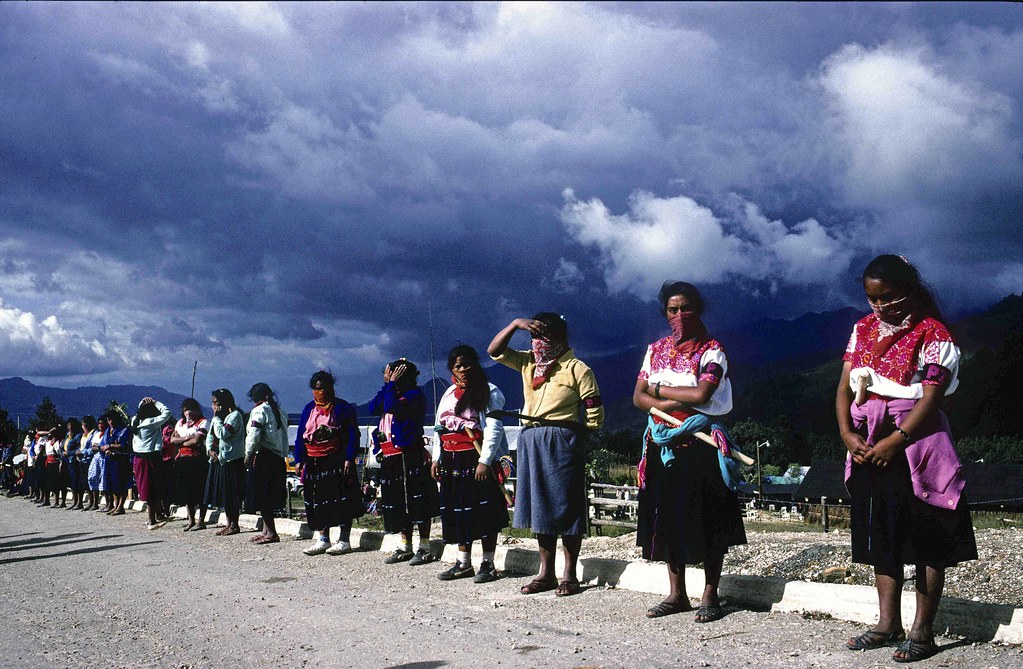
January 1st, 1994, was set to be the first day the North American Free Trade Agreement (NAFTA) would be in effect.
Following years of negotiation, the agreement created the then-largest free trade zone in the world, removing virtually all barriers to trade between Canada, the United States, and Mexico.
Politicians, multinational corporations, and foreign investors in North America alike celebrated the deal and looked optimistically towards the future.
In the midst of celebration, the Zapatistas, an indigenous rights group from Chiapas, Mexico, dreaded NAFTA’s implementation.
In particular, the Zapatistas condemned NAFTA for forcing Mexico to amend its constitution to remove protections for communal lands (ejidos) in favor of private ownership.
Beyond that, the Zapatistas believed Mexico’s projected increase in trade with the United States and Canada would significantly harm small-scale indigenous farmers.
On the first day NAFTA was set to be imposed over Mexico, thousands of Zapatista insurgents armed themselves and took control of seven Mexican cities over the course of just about a week.
After successfully conquering each city, the Zapatistas broadcast the First Declaration of Lacandon Jungle, explaining both their struggle and plan to conquer Mexico’s capital and depose the president.
The government pushed the Zapatistas back into Chiapas but eventually invited the Zapatistas to negotiations in Mexico’s capital.
Following the negotiations, the Zapatistas were granted the right to a semi-autonomous government that still operates in Chiapas.
Additionally, the Mexican federal government began creating agreements to recognize indigenous rights institutionally.
The Zapatista armed uprising radically transformed Mexican politics and created a blueprint for revolutionary success.

 Spykman Institute
Leave a comment