
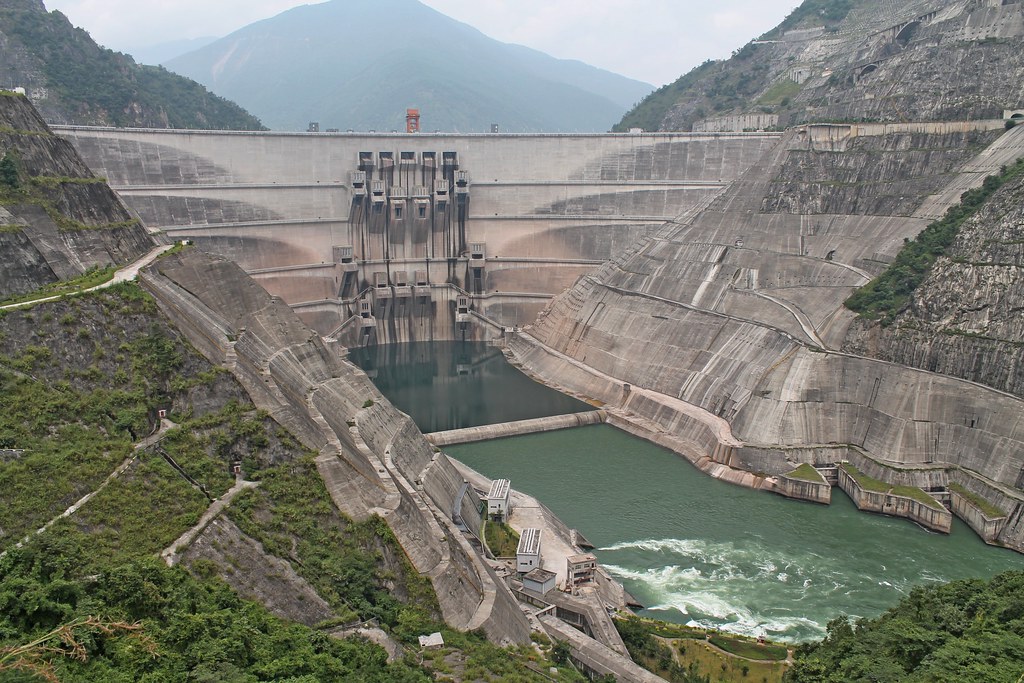
Dams are not only a source of green energy to the world, but a tool for countries to manipulate the environments of others as well. In the case of the Mekong River, there is seemingly nothing that countries in Southeast Asia can do to prevent China from controlling water flow within the Mekong River. The Mekong River flows through many different countries within the region, including China, Myanmar, Laos, Thailand, Cambodia, and Vietnam. This geological fact presents China with an extraordinary opportunity to control the water flow of the river to other countries.
The Mekong River starts in the Tibetan Plateau and flows downstream to other countries. Because of the downward flow of the river to Southeast Asia, when China constructed dams along the river, it had the ability to restrict the downward flow, effectively controlling how much water other countries receive from the Mekong.
According to the Stimson Center, in 2019, the 11 Chinese Dams constructed in the upper portion of the Mekong River, known as the Lancang River, restricted nearly all wet-season flow to the lower basin. Stimson Center cited that snowmelt and rainfall in the Lancang River were normal or high. However, the lower basin experienced a severe wet-season drought due to the dams constructed in China that restricted flow downstream.
The Mekong River is an essential part of Southeast Asian economies in the lower basin. The Mekong River Commission (MRC) explains that more than 70 million people rely on the river for their livelihood. The commission also states that Cambodia, Laos, Thailand, and Vietnam represent half of the Mekong region’s rice and fish production. The MRC cites that fisheries along the Mekong capture 2.3 million tons of fish worth about $11 billion in the lower basin alone. Fishing makes up a significant portion of Southeast Asian economies, and the construction of dams not only restricts the flow of water, disrupting the nutrients downstream, but also disrupts fish migration patterns.
The most obvious disruption the dams have for migrating fish is the physical barrier they create within the Mekong ecosystem. The dams block fish from migrating upstream to breed, decreasing the fish population long-term. Furthermore, the ability of dams to regulate and change the flow of water disrupts natural indications for breeding.
According to MRC, fish within the Mekong have seasonal hydrological cues like changing water current to signal the time to migrate and breed. However, with the construction of dams along the river, these hydrological cues are diminished, again hindering reproduction among fish, disrupting the growth of the populations and local fishing industries. Finally, according to the International Crisis Group, the increased construction of dams traps sediment, which is vital for nourishing soil and maintaining an ecosystem’s biodiversity.
The most tragic aspect for these countries is that the dams are constructed within China, diminishing any possible resistance to dam construction or regulation without international collaboration. However, Beijing continues its water restrictions on the lower basin region of the Mekong River. Per VOA News, China has repeated a pattern of removing as much water from the lower basin, withholding 10% of the water from the Mekong, restricting the flow of water, sediment, and other nutrients to the lower basin.
However, China is not the sole actor to blame for the environmental changes in the Mekong River. Countries in the lower basin have their own energy demands and have turned to the Mekong River for their solution. As reported by Dialogue Earth, energy demands in the lower basin region are increasing by 6-7% per year. The amount of hydroelectric energy has increased from 9.3 gigawatt-hours (GWh) to 32.4GWh from 2005 to 2015.
Seemingly ignoring the consequences of China’s upstream dams on the Mekong, countries like Laos have constructed dams along the Mekong River. However, the energy from these dams is mostly sold to neighboring countries rather than being used by Laos itself. Dialogue Earth recorded that the Xayaburi dam in Southeast Asia exports 95% of its generated power to neighboring countries like Thailand.
With continued Chinese regulation of the downstream flow of the Mekong and countries in the lower basin themselves constructing dams, there is no end in sight for the environmental consequences of the dams. Fisheries along the Mekong will be devastated, crops grown along the river will die, and local ecosystems will collapse. Yet, the most troubling consequence is the destruction of societies along the river.
Livelihoods will be destroyed as the environment changes for the worse, and individuals will be forced to adapt to new circumstances as nothing gets done politically. With no end in sight and no ability to compromise on the river across state borders, local communities are bound to suffer as the ecosystem along the Mekong River collapses.


 Spykman Institute
Leave a comment