
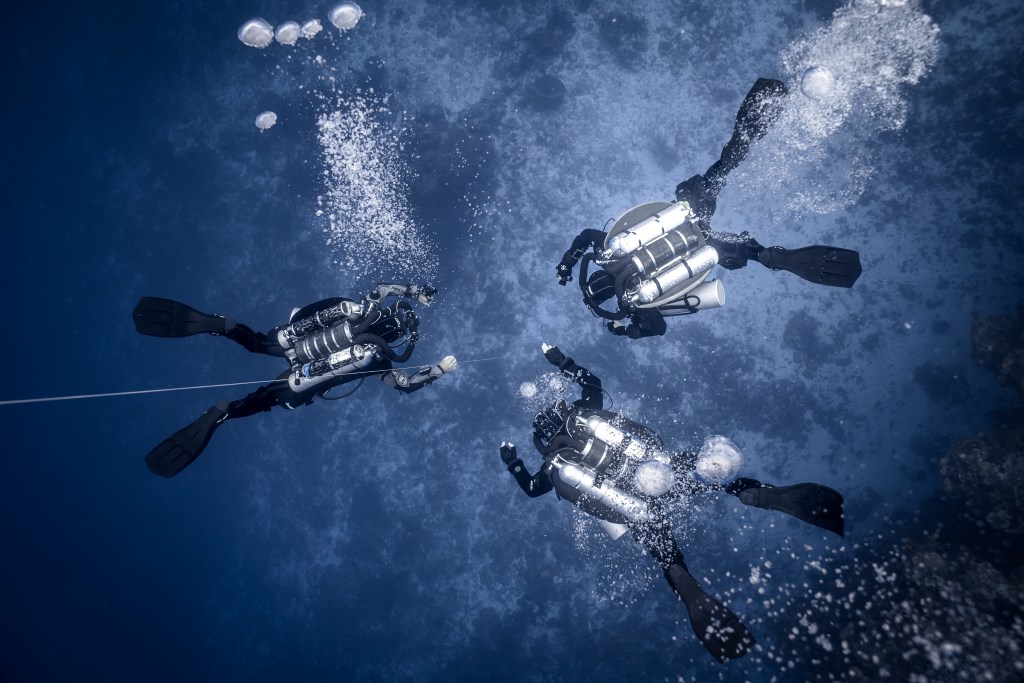
The Pacific Ocean is home to some of the world’s largest sea creatures and remains largely unexplored and unknown to humanity. Yet, beneath the surface are complex networks of cables that digitally link countries. As data traffic rises and the world becomes more computerized, demand for these cables grows, and their importance increases.
In Oceania, Australia, the United States, and the United Kingdom form one bloc assembling these string-like cables across the ocean floor. However, these countries are not met without competition. Chinese and Russian sabotage of these cables and their own claims on constructing them lead to rising tensions among the two blocs, potentially escalating conflict in Oceania.
The conflict over the East Micronesia Cable provides us with a case study. The East Micronesia Cable is a $95m project that spans 140 miles in Micronesia, passing through the waters of Micronesia, Kiribati, and Nauru. Initially, Japan and France had bids to fund the construction of the cable.
However, during the developmental phase of this project, according to Reuters, Huawei Marine Networks (HMN) submitted a bid for the project at $72.6 million, undercutting opposing offers by 20%. Upon hearing about the Chinese offer, Washington raised security concerns over Chinese construction of the cable. The East Micronesia Cable connects to a larger network of underwater cables, most notably a cable connected to Guam, a country with significant US military facilities.
The nations in the region, when deciding how to fund the project, ruled all 3 bids as “non-compliant”. This move for the nations was strategic. Under previous circumstances, the World Bank and the Asian Development Bank (ADB) set terms for bidding. The Straits Times explains that under their terms, the governments of Micronesia, Kiribati, and Nauru could not exclude the bid from HMN because of security concerns. The World Bank’s and ADB’s framework of bidding mandated open, competitive international bidding, making it impossible to eliminate a bid solely because of geopolitical reasons.
When the nations ruled all 3 bids as “non-compliant,” it signaled that none of the nations’ bids made during that stage of the project were to be taken. However, following this move by local governments, the United States, allied with Australia and Japan, offered a fully funded project to the local governments individually rather than on the stage with the guidelines from the World Bank and ADB.
This allowed the US, Australia, and Japan to bypass the Chinese bid and carry on with construction of the underwater wire. This conflict signals the competition among global superpowers over the construction of underground wires in Oceania and the potential gridlock that could occur if the US did not negotiate with the local countries and left the bidding under the terms of the World Bank and ADB.
The physical characteristics of underwater cables foster the usage of grey-zone tactics to take control of various parts of the ocean. Because these cables span across large areas of unguarded or patrolled oceans, they open the opportunity for sabotage by other countries to interfere with the communications that pass through them. What heightens the risk for countries in Oceania is that most are connected to the framework with single points of failure (SPOFs). This means that islands usually have a singular cable connecting themselves to the digital world.
In 2022, the Hunga Tonga-Hunga Ha’apai volcano erupted, severing the singular cable connecting Tonga to the rest of the world. For weeks, the country lost power and internet service, ending any effort to reach out to neighbors to call for help. The book Beneath the Waves, written by Samanth Subramanian, described the experience on the island as reverting to the 1880s. Banking records were kept on paper as the whole system froze during the dark age. Citing that the Tongan economy wasn’t as integrated into the modern world, Subramanian explained how that actually helped with the country’s resilience to the blackout. Nevertheless, the country had to wait in hopes of a lifeline for internet connection, with modern systems frozen and the country crawling to a standstill.
If the natural disaster was substituted with a targeted sabotage onto the wires, one can only imagine the opportunities countries have to shut down digital ecosystems for these island nations. Masking underwater sabotage as accidents, countries can deploy fishing boats and drag their anchors through such cables, only citing the damage as a commercial incident rather than a targeted geopolitical attack. In 2023, two Chinese commercial vessels used this tactic to cut the two internet cables connecting the island of Matsu to the rest of the world.
According to AP News, Taiwan stopped short of calling this attack deliberate, being unable to find conclusive evidence that this attack was an order from Beijing. AP reports that the cables have been cut 27 times from 2018-2023. This ambiguity behind the attacks has two sides. On one hand, it allows countries to get away with targeted sabotage, isolating island nations and endangering the citizens on them. On the other hand, because of the ambiguity, it prevents escalating geopolitical tensions, leaving countries left to speculate.
This argument can be taken both ways, however. Because countries are left to speculate who conducted the sabotage, if a country were to go through with their speculation without definitive evidence on who conducted the attack, the escalation would undoubtedly lead to a full-fledged war.
Another vulnerability is the maintenance fleets for such cables under the sea. According to Bloomsbury Intelligence and Security Institute, Chinese repair fleets are dual-equipped to be able to map, tap, and cut cables, increasing security threats every time a cable needs repair. If a Chinese fleet was assigned to repair an underwater cable, they would have the ability to tap into the cable, increasing their espionage capability.
An interesting pattern here emerges. Chinese commercial vessels are cutting these cables across the seabed, and if Chinese fleets are repairing the cables that they are cutting, there is the potential that they are tapping into these cables, increasing their espionage capability. China here seems to have a dedicated strategy to circumnavigate the United States, directly talking with Oceanic countries to build cables along the seabed. With Chinese sabotage and no clear way of pinning such sabotage to Beijing, it seems Oceanic countries will have to deal with the continued attacks and be wary about who repairs the cables. Oceania is trapped in this silent battle as the cables grapple and choke the region for its information.
 Spykman Institute
Leave a comment