
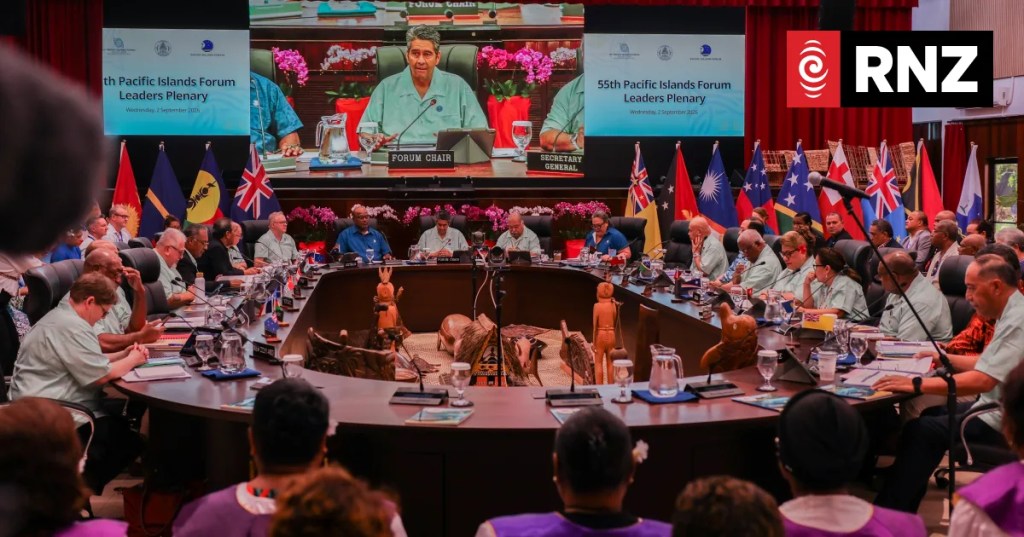
1. The 55th Pacific Islands Forum Leaders Meeting was held in Koror. Which country hosted, and who chaired the meeting?
a) Solomon Islands, chaired by Matthew Wale
b) Palau, chaired by Surangel Whipps Jr.
c) Fiji, chaired by Sitiveni Rabuka
d) Nauru, chaired by David Adeang
2. Forum leaders demanded a minimum period of advance warning for intercontinental ballistic missile tests in the region. How long?
a) 6 hours
b) 24 hours
c) 72 hours
d) 7 days
3. One Forum member formally dissented from the leaders’ position on the missile test, and a second declined to participate in the statement. Which two?
a) Vanuatu dissented, Samoa abstained
b) Solomon Islands dissented, Fiji abstained
c) Nauru dissented, Kiribati did not participate
d) Tuvalu dissented, Papua New Guinea did not participate
4. Taiwan participated in the Forum in its own right. Under what designation, and how does that differ from China’s status at the Forum?
a) Taiwan attended as a dialogue partner, the same status China holds
b) Taiwan attended as a development partner, while China is a dialogue partner
c) Taiwan attended as a full member, while China is a development partner
d) Taiwan attended as an observer, while China holds no formal status
5. Solomon Islands Prime Minister Matthew Wale left Palau within hours of arriving. Who filed the no-confidence motion against him, and what was the stated grounds?
a) Foreign Minister Rick Houenipwela, over the Bina Harbour negotiations
b) Home Affairs Minister Manasseh Maelanga, over deciding matters of national importance without cabinet consultation
c) Finance Minister Gordon Darcy Lilo, over the Pacific Games audit
d) Former Prime Minister Jeremiah Manele, over coalition arrangements
6. China’s National People’s Congress passed a revision to the National Defense Mobilization Law. What is the single most significant legal change in the revised text?
a) It extends conscription eligibility to reservists over 45
b) It replaces “requisition” of private property with “expropriate”
c) It transfers mobilization authority from the NPC to the Central Military Commission
d) It creates a standing civilian militia under provincial command
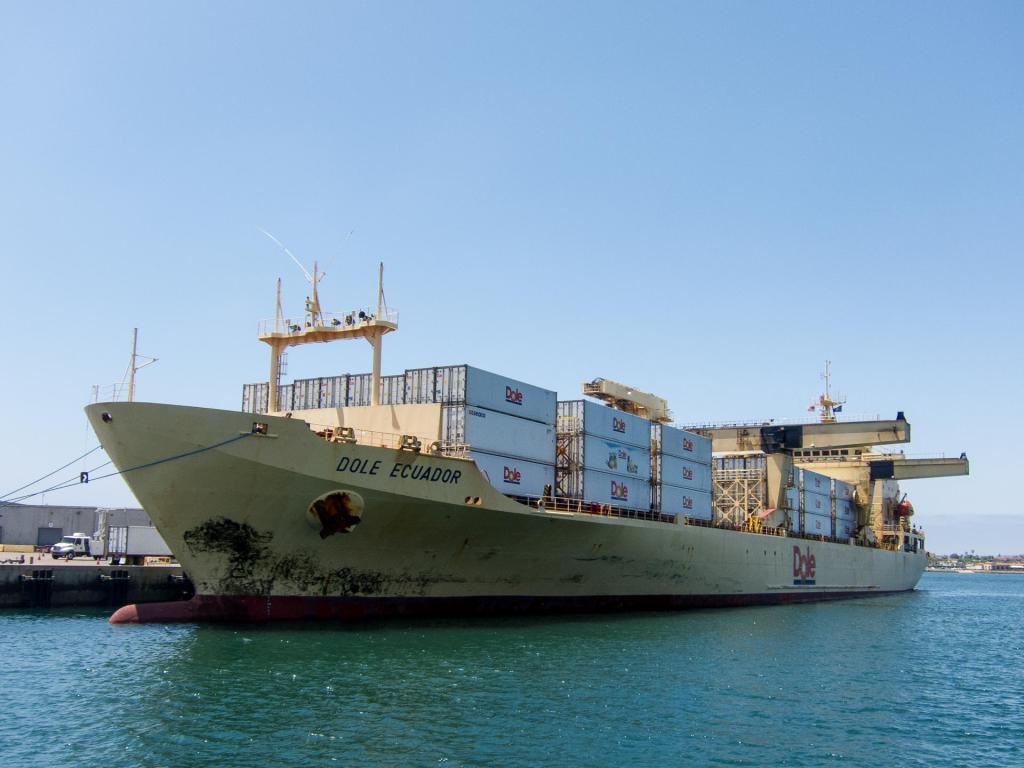
7. Reuters reported on September 1 that US officials accuse COSCO of what activity, and roughly what did the officials say the equipment targets?
a) Transshipping sanctioned Russian crude, targeting price-cap enforcement
b) Carrying concealed signals intelligence platforms, targeting military communications technology and encryption developments
c) Laying undersea cable taps, targeting transpacific financial data
d) Operating unregistered drone launchers, targeting carrier strike groups
8. China’s Foreign Ministry invoked a provision of the UN Charter against Japan on September 2. Which provision, and why is the invocation notable?
a) The Article 51 self-defense provision, notable because China has never cited it before
b) The trusteeship provisions, notable because they were formally suspended in 1994
c) The enemy state clause, notable because Beijing previously supported removing it from the Charter
d) The Uniting for Peace resolution, notable because it bypasses the Security Council veto
9. China’s official manufacturing PMI for August came in at which level, and what did it signify?
a) 50.3, a return to expansion after four months
b) 49.2, an unchanged reading from July
c) 49.8, an improvement from July but a second straight month of contraction
d) 51.5, the strongest reading of the year
10. The private RatingDog manufacturing PMI told a different story from the official index in August. What did it show, and what unusual pricing behavior did it record?
a) It fell to 48.9, with input costs rising at the fastest pace since 2023
b) It rose to 51.5 on the strongest export orders in six months, with manufacturers cutting selling prices for the first time this year
c) It held flat at 50.9, with output prices rising for a fourth month
d) It rose to 53.2 on domestic demand, with wages climbing sharply
ANSWERS
1. (b) Palau, chaired by Surangel Whipps Jr. Palau hosted the 55th Leaders Meeting in Koror, taking the chairmanship over from Solomon Islands. As host, Palau controlled the invitation list, which is what made Taiwan’s participation possible this year.
2. (b) 24 hours. Leaders demanded at least 24 hours of advance notice for ICBM tests. The communiqué did not name China, though the demand plainly followed Beijing’s July submarine-launched ICBM test in the South Pacific.
3. (c) Nauru dissented, Kiribati did not participate. Whipps announced the Nauru dissent directly when releasing the outcome. Both Nauru and Kiribati recognize Beijing rather than Taipei, which is the relevant alignment here. This is the second consecutive month the Forum has failed to produce a unanimous position on the test, after the August 7 foreign ministers meeting in Suva broke down over the same question.
4. (b) Taiwan attended as a development partner, while China is a dialogue partner. Taiwan has held development partner status since 1993 and is not a member. China holds dialogue partner status alongside the United States, Japan, India, Canada, Britain, and the EU. Beijing objected to Taiwan’s participation and warned of consequences.
5. (b) Home Affairs Minister Manasseh Maelanga, over unilateral decision-making. Maelanga resigned along with Justice Minister Clezy Rore and Commerce Minister Harry Kuma. Wale then replaced two of the three and sacked Finance Minister Gordon Darcy Lilo, who had distanced himself from the motion. The debate is set for September 7. Wale has been in office only since May 15, when a no-confidence motion removed Jeremiah Manele.
6. (b) It replaces “requisition” with “expropriate.” The revision passed August 28 and takes effect October 1. The wording change implies more permanent state control over seized civilian assets rather than temporary use. The revised text also specifies invocation when sovereignty, territorial integrity, or development interests face a direct threat, language broad enough to apply below the threshold of war. Analysts flag sealift and drones as the two areas where this matters most.
7. (b) Concealed signals intelligence platforms targeting military communications technology and encryption. Two senior administration officials described a collection relationship with Beijing going back decades, covering coastlines in North America, Europe, and Asia. China’s embassy in Washington rejected the account and COSCO issued its own denial on September 4. The Americas exposure is substantial: COSCO holds a 60 percent stake at Peru’s Chancay megaport and holdings at US ports in California and Seattle.
8. (c) The enemy state clause, and Beijing previously supported removing it. The clause permits action against former Axis powers without Security Council authorization. China had backed striking it from the Charter, so citing it now is a reversal. The PRC Embassy in Tokyo already invoked it in November 2025 after Takaichi’s Taiwan contingency remarks.
9. (c) 49.8, improved from 49.2 but still contracting. The reading beat the 49.6 median forecast in a Reuters poll. Production rose to 50.4 and new orders to 50.6, both back in expansion, but small firms stayed weak at 47.9 and medium firms slipped to 49.4. The headline stayed below the 50 line for a second month.
10. (b) It rose to 51.5 with the strongest export orders in six months, and manufacturers cut selling prices for the first time this year. The official index weights large and state-linked firms more heavily, while the private survey skews toward smaller exporters. The price cutting points to competitive pressure rather than recovering demand. Second-quarter GDP growth of 4.3 percent remains below the lower bound of Beijing’s 4.5 to 5 percent annual target.
 Spykman Institute
Leave a comment