
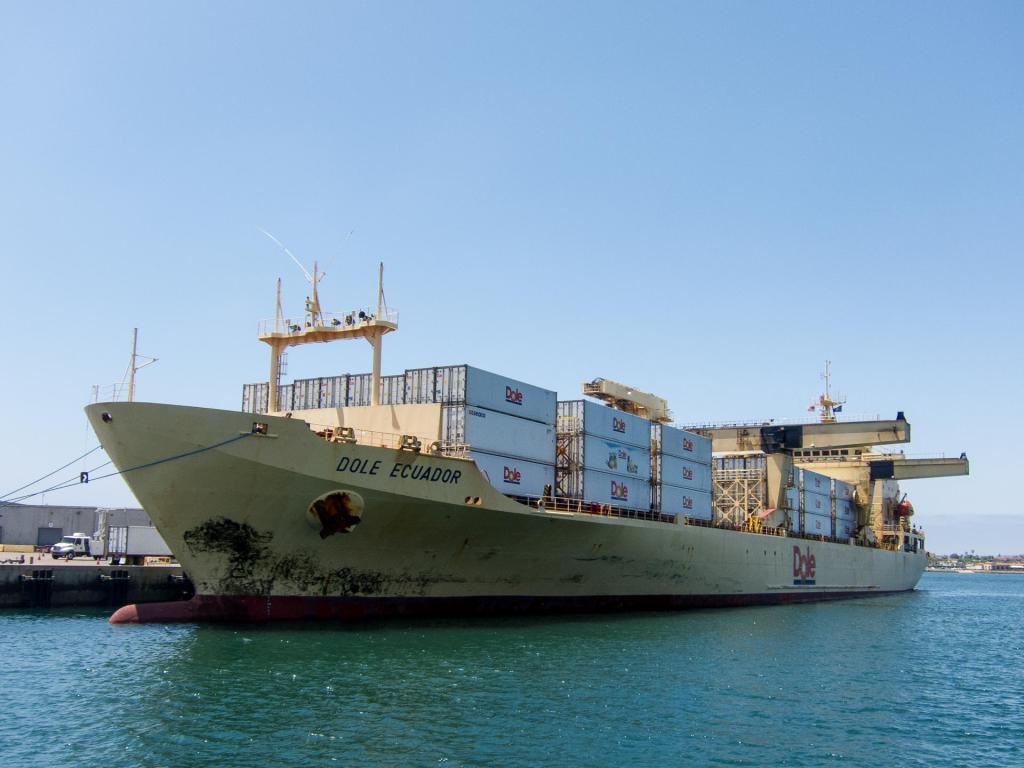
Weeks ago, DP World launched a new direct shipping service from Ecuador’s Port of Posorja to Asia, operated by both Ocean Network Express and Hyundai Merchant Marine, with weekly sailings and twenty-one-day transit times. This direct route to Asia from an Ecuadorian terminal is a huge investment that shows confidence in Ecuador’s future as a trade hub.
However, Ecuador is the same country that recorded roughly 9,200 homicides in 2025, a national rate of about 51 homicides per 100,000 people, the highest in Latin America. This violence is concentrated specifically in the coastal provinces surrounding the ports that DP World just invested in.
Ecuador’s security crisis is real and well-documented. What is underdocumented is the economic argument for fixing it. Ecuador’s Pacific ports move tens of billions of dollars in goods that feed supply chains across Asia, North America, and Europe. Treating the security collapse as only a humanitarian problem misses why the stakes extend far beyond Ecuador’s borders.
Shrimp surpassed oil as Ecuador’s largest export in 2025 for the first time in fifty years, reaching $8.4 billion. Ecuador is the world’s leading farmed shrimp exporter, shipping between 600,000 and 700,000 tonnes annually. Roughly 40 to 50 percent of Ecuador’s shrimp goes directly to China, with the rest feeding supply networks across the EU, US, and Southeast Asia.
Ecuador also exports more bananas than any other country, with Puerto Bolívar alone processing approximately 3 million tonnes per year. Add in copper, cocoa, and oil, and Ecuador’s total export surplus hit $4.5 billion in 2025, with almost all of it moving through Pacific coast ports.
Sitting on the Guayas River with direct Pacific access, the Port of Guayaquil handles 90 percent of Ecuador’s imports and 50 percent of its exports. This makes it the bottleneck for an economy with no redundancy if Guayaquil slows down.
Security costs are already showing up in freight pricing. Armed escort requirements and security surcharges have added 15 to 25 percent to freight costs along Ecuador’s highway and port corridors. These added costs directly compete with the investment needed to support Ecuador’s hydropower-dependent grid, which suffered $2 billion in losses during the 2024 drought, causing port shutdowns lasting 12 to 48 hours, with downstream cargo delays of 24 to 72 hours. Modern container handling equipment and refrigeration systems for shrimp and bananas require stable electricity. When the grid goes down, the port stops. When the port stops, perishable cargo spoils.
A 2026 trade dispute between Ecuador and Colombia added 30 percent security tariffs on cross-border imports, forcing some shippers to reroute. These cost increases land directly on the buyers of Ecuadorian shrimp in Shanghai, Ecuadorian bananas in Hamburg, and Ecuadorian copper in Seoul.
Ecuador’s Pacific ports sit between Colombia and Peru, the world’s two largest cocaine producers. Violence has concentrated specifically in the coastal provinces whose ports serve as core nodes for cocaine shipments to Europe and the United States. Transnational criminal organizations fought for control of those ports beginning around 2022. The legitimate supply chains running through the same infrastructure are being forced to pay a price.
Ecuador is not a maritime chokepoint in the way the Strait of Hormuz or the Panama Canal is: it is a critical point on South America’s Pacific Coast supply chain that connects the continent’s agricultural exporters to Asian buyers and North American importers.
So what should governments do? The United States should not just treat Ecuador’s port security as an enforcement problem. The US imposed a 10 percent baseline tariff on Ecuadorian exports in April 2025. Ecuadorian exporters are paying American tariffs while managing American-bound drug trafficking that runs through their ports.
Port security assistance, whether through Coast Guard cooperation or customs infrastructure investment, would directly protect the supply chains US importers depend on. Regional governments, specifically Colombia and Peru, need to coordinate with Ecuador on port security rather than treating cross-border enforcement as an internal matter. The criminal organizations moving cocaine through Guayaquil operate across all three countries, meaning that the freight disruptions they cause affect trade from all three as well.
Ecuador’s government, which has already seen country risk fall from 2,016 points to 460 points in two years under President Noboa’s security push, should use that momentum to show investors that port security is improving faster than headlines suggest. The DP World investment shows that some are already reaching that conclusion.
The case for Ecuador is not that the security crisis is over, but that Ecuador’s Pacific ports are too important to the regional supply chain to treat their vulnerability as someone else’s problem. Shrimp, bananas, copper, and cocoa buyers do not care about homicide statistics. They care about cold chains staying cold and cargo getting where it needs to on time. The governments and institutions that help Ecuador secure those logistics corridors will protect their own supply chains in the process.
 Spykman Institute
Leave a comment