
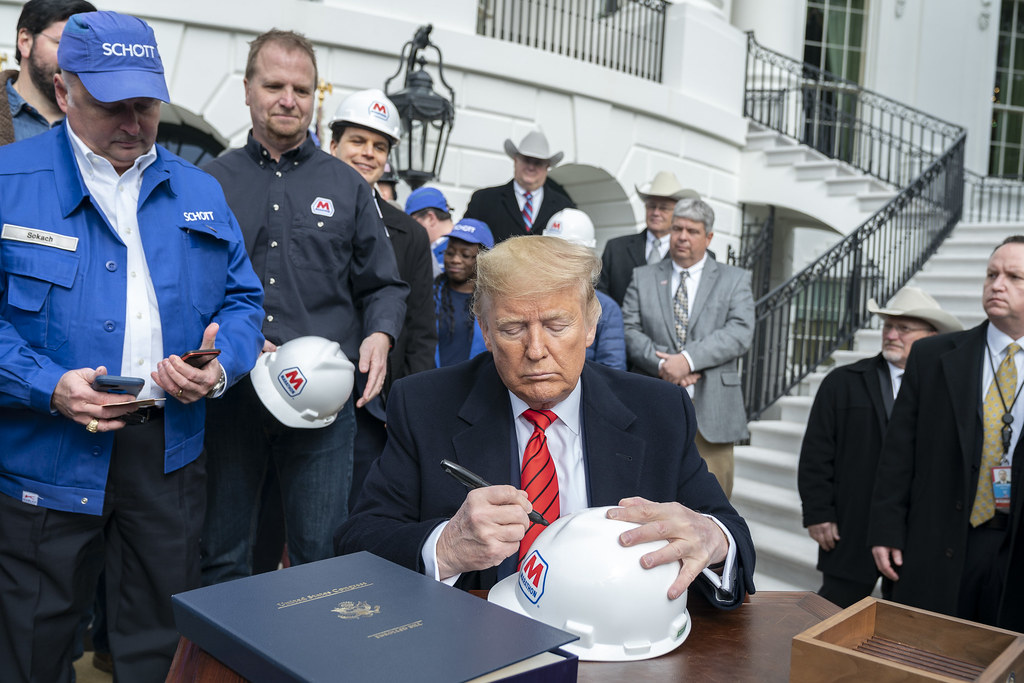
On July 1, the United States announced it would not renew USMCA. Trade journalists called it a bombshell. Supply chain executives sent panicked memos. Politicians on all three sides issued warnings.
What actually happened was considerably less dramatic.
USMCA, the free trade agreement linking the United States, Mexico, and Canada, did not expire. It did not collapse. It did not even change. The US declined to extend it for a fresh 16-year term, which triggered a process of annual reviews, but the agreement itself remains fully in force until 2036 at the earliest. Every preferential tariff, every rules-of-origin provision, and every investment protection is still in operation today. US and Mexican negotiators met again in Mexico City on July 20 to begin the next round of talks.
The crisis, in other words, is a negotiation.
To understand why this matters, it helps to understand what USMCA actually does.
The agreement governs roughly $1.8 trillion in annual trade between the US, Mexico, and Canada. It keeps most goods moving between the three countries duty-free, as long as those goods are actually made in North America. That last condition is the heart of the current dispute.
The US has two core complaints. The first is that too much production is happening outside the United States, particularly in Mexico. Second, the US suspects that Chinese manufacturers are routing components through Mexico to access American markets at preferential tariff rates, effectively using USMCA as a backdoor around China tariffs. According to CSIS, the Trump administration is pushing for stricter content rules, higher wage requirements, and tighter enforcement to limit Chinese inputs in North American supply chains.
These are not unreasonable concerns, but breaking USMCA would hurt the United States more than the country seems to think.
Since the agreement entered into force in 2020, intra-regional trade has grown 37 percent. Jobs supported by USMCA-related trade have grown 18 percent. Mexico and Canada collectively imported $60 billion in US agricultural products in 2024 alone. Members of the House Agriculture Committee wrote to the US Trade Representative on July 1, warning that USMCA’s agricultural provisions support nearly half a million American jobs and generate $149 billion in total economic contribution annually.
The US is not going to just walk away from those numbers, and neither is Mexico.
Mexico closed 2025 with a record $40.87 billion in foreign direct investment, up nearly 11 percent year over year, according to 3PL Center. A Deloitte survey found 62 percent of American companies are either already moving production to Mexico or actively considering it. Every company that moves a factory to Mexico deepens the mutual dependency that makes blowing up the agreement politically unthinkable.
What Mexico actually needs to do is not just survive the negotiations, but use them.
The US complaints about Chinese content routing through Mexico are legitimate, and Mexico should treat them as an opportunity rather than a threat. According to White & Case, the integrated North American manufacturing ecosystem, in a successful scenario, should emerge from this process with a reinforced continental supply chain: one that explicitly locks out Chinese components and locks in Mexican production as the trusted alternative.
This is a feasible outcome. Mexico’s automotive sector already operates under a 75 percent regional value content rule, the strictest threshold of any major trade agreement in the world. Tightening those rules further increases costs in the short term, but it also raises the bar for any competitor trying to replicate what Mexico has already built. And Mexico is already positioning itself as a key player in the North American electric vehicle market given its growing lithium reserves and battery manufacturing base.
The annual review process is a recurring opportunity to update the terms of the relationship as the manufacturing landscape evolves. Mexico enters each round with more leverage than the last, because factories keep moving there. The real risk for Mexico is treating the review as an external threat rather than a strategic opening.
The US wants a more North American supply chain. Mexico is North America. The companies relocating production from China to Mexico are building exactly the kind of integrated regional manufacturing base Washington says it wants. The negotiations are a chance to make that argument formally and cement Mexico’s role in the next phase of North American industry.
USMCA is not in crisis. It is in conversation. And Mexico is sitting at the table with lots to offer.

 Spykman Institute
Leave a comment