
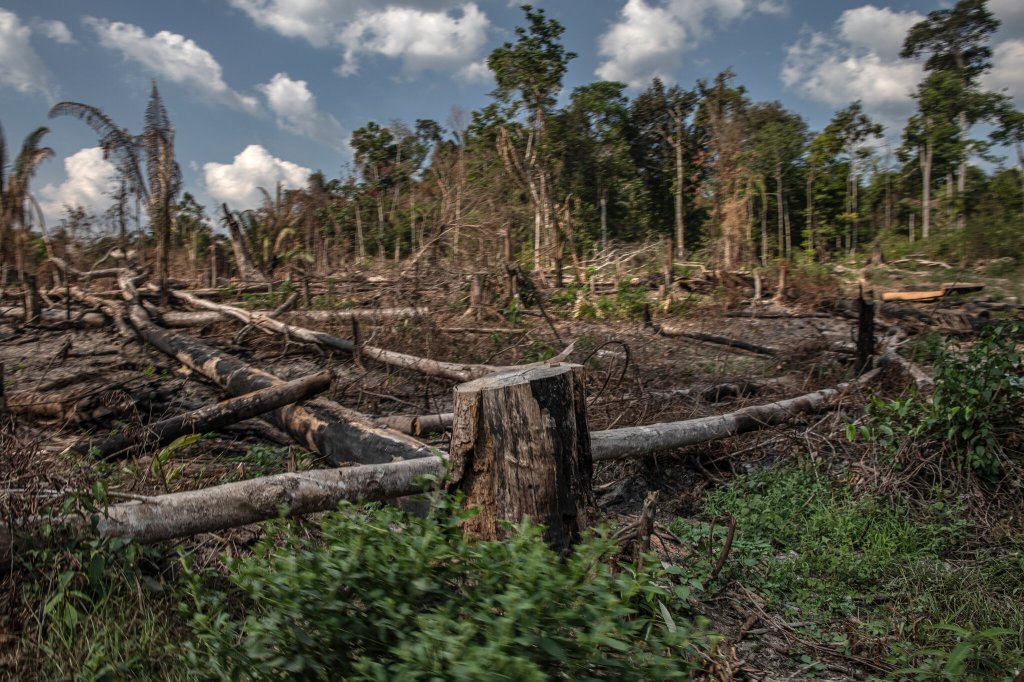
Last month, Brazil’s National Institute for Space Research released an encouraging number. Amazon deforestation alerts hit their lowest level since monitoring began, falling 36 percent from the previous year to 2,874 square kilometers. The Lula administration achieved this while Brazilian agribusiness GDP grew 12.2 percent in 2025, successfully allowing conservation and agricultural growth to coexist.
The world’s response? The United States proposed a 25 percent tariff on Brazilian goods, and the $125 billion international forest financing mechanism launched at COP30 in November remains unfunded. And although Brazil has dropped the number from 18, 5 trees still fall in the Amazon every second.
Brazil has made a model that works, but the international community refuses to pay for it.
The Amazon is everyone’s problem, not just Brazil’s. A 2025 World Bank report found that deforestation-driven reductions in the Amazon’s water cycle cause annual global losses of around $379 billion, or roughly 8 percent of global agricultural GDP. The Amazon is more than just a forest. It generates rainfall that feeds agriculture across South America, regulates temperatures that affect growing seasons well beyond its borders, and maintains biodiversity that supports pharmaceutical, agricultural, and ecological systems worldwide. Scientists warn that the Amazon could cross an irreversible tipping point if deforestation exceeds 20 to 25 percent of its original forest cover. That tipping point would not stay inside Brazil’s borders.
The Amazon is a global public good, but the cost of preserving it sits almost entirely with Brazil.
Every hectare of the Amazon left standing is a hectare that cannot be cleared for soy, cattle, mining, or infrastructure. Those activities generate jobs, exports, and tax revenue. Other wealthier countries built their economies on these activities for the past two centuries, but Brazil has been paying the burden of leaving that value behind.
It’s not just what Brazil has been missing out on, but also what they end up paying. Under the Lula administration, deforestation fell from emergency levels under the previous government to a six-year low by 2025, then to a historic low by 2026. The decline can be directly attributed to increased enforcement actions and sanctions. Brazil spent capital and other resources on a conservation effort that delivers its largest benefits to people who live nowhere near the Amazon, also inadvertently causing a big hit to the domestic credibility of Brazilian leadership.
The international community, in return, gathered in Belém last November for COP30. The summit produced no promised plan to halt deforestation. References to the Amazon were largely confined to preambular language, and the Tropical Forest Forever Facility, a proposed $125 billion mechanism to pay countries directly for maintaining forest cover, was launched as a concept.
Climate diplomacy is causing the hardest decisions to be deferred, and in this case, that decision is writing a check.
Some will argue that Brazil is sovereign over its own territory and should not require international permission or payment to manage its own land. This is correct, but if the world benefits from Amazon conservation, the world should help fund it. That’s how public goods work.
At this point, it is clear that some countries are explicitly freeloading. The United States, which withdrew from the Paris Agreement in January 2025 and cancelled billions in promised climate finance to developing nations, proposed a 25 percent tariff on Brazilian goods in June 2026. Washington wants Brazil to protect a global climate asset, but it penalizes its exports. Meanwhile, the European Union’s deforestation regulation places compliance costs on Brazilian producers without directing compensation back to Brazilian conservation efforts.
The Tropical Forest Forever Facility needs to be funded. Brazil designed the TFFF specifically to create a reliable payment mechanism for a global public good. While Germany, Norway, France, Portugal, and the Netherlands committed $6.6 billion to a related forest preservation fund at COP30, the $125 billion target is quite far away. Achieving it will require wealthy governments to treat forest protection as a budget priority.
The United States should return to the table. The Biden administration committed over $11 billion annually in international climate finance, and launched a $10 billion Brazil Restoration and Bioeconomy Finance Coalition in a 2024 announcement. That commitment was cancelled, but its cancellation did not make the Amazon less important to American agriculture, climate stability, or supply chains.
Brazil remarkably demonstrated that it knows the Amazon matters, protecting it at a historic scale. The question now is whether the rest of the world will follow. Five trees per second says the answer, so far, is no.

 Spykman Institute
Leave a comment