
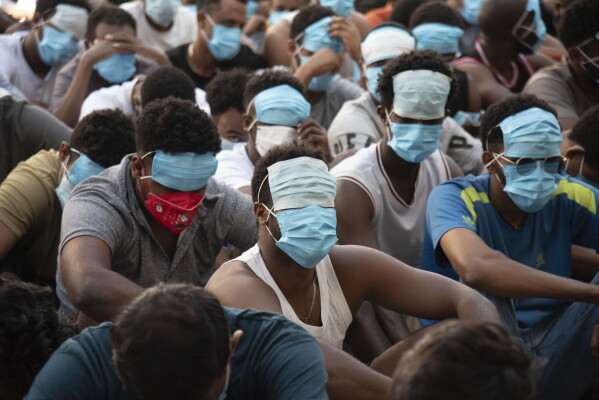
As global superpowers grapple for control over Southeast Asia, countries within the region turn a blind eye to the issue of human trafficking. The vulnerability of Southeast Asian nations as they grapple for sovereignty creates an environment where individuals seek greater wealth. Many countries in Southeast Asia are impoverished, lacking resources and getting overburdened with diplomacy.
With a fast-growing underground industry, individuals are forced into labor camps, sexual exploitation, and coerced marriages, making human trafficking a highly lucrative endeavor. Yet, with the exposed state of Southeast Asia, it not only incentivizes individuals to engage in human trafficking but also increases the sheer volume of individuals falling victim to human trafficking as they engage with digital scams.
Digital scams in Southeast Asia begin as fake job advertisements. Professional-looking posts promise wealthy salaries, travel benefits, and access to further job networks. What becomes frightening is that these fake job postings are on well-known platforms like LinkedIn. Free the Slaves explains that scammers follow up on job postings with interviews, visas, and flight arrangements. When individuals arrive at their workplace, their passports and other important documents are confiscated, and they are kept at brutal detention centers lined with barbed wire, armed guards, and surveillance, mimicking a prison so that individuals cannot escape.
These scam centers and the industry are thriving. According to UN News, at least 300,000 individuals are working in human trafficking operations across Southeast Asia. Estimated global revenues are projected to exceed $64 billion a year. Despite how lucrative this industry is, according to Free the Slaves, 150,000 workers in Cambodia share 50 beds in one shelter.
To put the issue of human trafficking into perspective, according to the Walk Free Foundation, two-thirds of its victims are in the Pacific region. The majority of human trafficking happening globally occurs in the Southeast Asian region. Victims of these scams and detention centers are primarily young, tech-literate men who can work longer hours and be the most productive.
However, the gender demographics throughout human trafficking as a whole are staggering. The majority of victims are either women or children. According to the United Nations Office on Drugs and Crime (UNODC), 51% of victims were Asian, and about a third were children. This indicates that the primary reasons for exploitation are not only labor but sexual exploitation and the creation of child pornography. The sexual abuse of children in Southeast Asia has generated somewhere between $3 billion and $20 billion in profit a year, per the IMF.
Human trafficking in Southeast Asia has spread to China, opening the issue to a global scale. With many of the large scam centers migrating to the Southeast Asia region due to the Chinese crackdown on human trafficking, humans are still moving across borders into Chinese territory. Following the one-child policy, a massive gender imbalance was created, causing men to have difficulty in finding wives. According to Human Rights Watch, there are about 30-40 million more men than women in China.
With Chinese families opting to have a son rather than a daughter, women and girls are smuggled from northern Myanmar into China, many belonging to ethnic minorities. The scheme in northern Myanmar involves brokers promising employment in China. However, once these victims cross the border, brokers sell them for around $3,000-13,000. Once purchased, these women are kept prisoner and forced to produce babies.
Beijing seems to cooperate with Pakistan on the issue of human trafficking of women across borders. Yet, in Myanmar, Chinese propaganda floods the media, stating that trafficking might actually be a good thing for Myanmar women. Once the women learn Chinese culture and the language, Beijing claims that marriages flourish and that the Myanmar women are in a better position following the trafficking than preceding it. With such trafficking remaining relatively unknown throughout mainland China, there doesn’t seem to be significant action taken by Beijing to slow it down.
Countries in the Association of Southeast Asian Nations (ASEAN) have demonstrated cooperation in combating human trafficking. With the power of online scams, borders of countries are erased as operations grow. According to the UNODC, countries in Southeast Asia have created Project PROTECT, which brings together ASEAN countries to share updates on trafficking trends and active cases. However, this is concerning. The sharing of information isn’t the difficult part but rather finding regional cooperation. In a region with fractured cooperation, having an efficient and unified police force against human trafficking seems unlikely.
Countries in Southeast Asia constantly face internal conflicts, whether that be civil wars in Myanmar or uprisings in Thailand, but also face external pressures from global superpowers as they learn how they can exert as much control as they can over the Southeast Asian countries. Furthermore, such pressure and conflicts only hinder the ability of such countries to unify against human trafficking. As technology improves exponentially, governments in Southeast Asia are left to play catch-up as human trafficking continues to evolve and outpace current prevention efforts.
 Spykman Institute
Leave a comment