
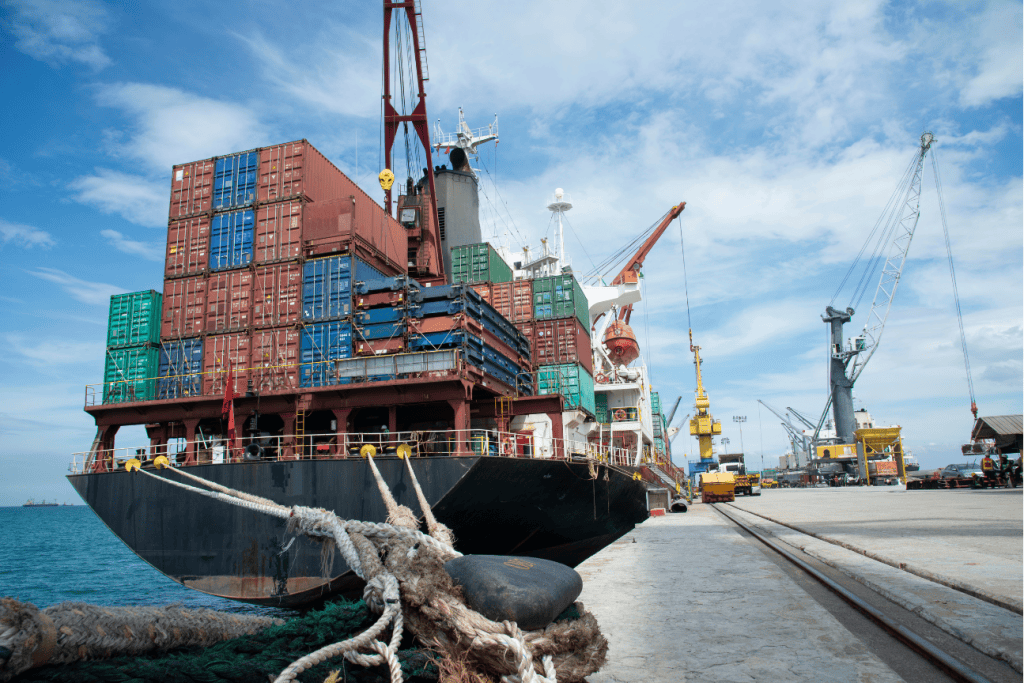
In January 2026, Mexico announced $5.8 billion in new investments all in a single month, across energy, industrial parks, automotive, pharmaceuticals, and advanced manufacturing. The country closed 2025 with a record $40.87 billion in foreign direct investment, up nearly 11 percent year over year, according to 3PL Center.
Sixty-two percent of American companies are either already relocating production to Mexico or actively considering it. This is one of Latin America’s biggest economic opportunities in a generation, as absorbing the wave of manufacturing relocation could prove an incredible economic boon for its nations..
Companies are now moving supply chains out of China toward the Americas as Section 301 tariffs damage the profitability of Chinese goods and companies are realizing the enormous logistical costs of transport from Asian markets to buyers. The countries that solve their infrastructure gaps now will capture decades of manufacturing investment. The ones that don’t will watch the opportunity pass to Vietnam and India.
There are plenty of forces at work driving this nearshoring. Trucking from Monterrey to Dallas takes 8 to 10 hours. Ocean freight from Shenzhen to Long Beach takes 14 to 21 days, before customs. Total logistics costs from Asia run 30 to 50 percent higher than from Mexico, and if you add Section 301 tariffs of up to 25 percent on Chinese goods compared to duty-free access under USMCA (the agreement that replaced NAFTA in 2020 and lets qualifying North American goods cross borders untaxed), the math for relocating production becomes difficult to argue against.
According to Bain and Company, 80 percent of chief operating officers plan to increase nearshoring or onshoring within the next three years, up from 63 percent in 2022. A concerted nearshoring push could unlock a $500 billion export opportunity for Mexico alone.
Interestingly, it’s not just one sector that’s growing fastest. Electronics exports from Mexico grew rapidly through 2025. Semiconductor assembly and testing operations are expanding in Baja California and Coahuila. Aerospace manufacturing has concentrated in Sonora, Chihuahua, and Querétaro. Japanese auto suppliers alone have committed an estimated $18 billion, according to American Industries Group.
Latin America is not just a cheaper version of China. It is structurally different, with closer proximity, trade access, and a young workforce, all packaged inside USMCA.
But the opportunity has a bottleneck. And that bottleneck is power.
Colombia is entering a structural energy crisis in 2026. According to FrontierView, Colombia’s electricity grid operator XM warned in early July that the country projected 4,475 megawatts of new generation capacity for 2026, but only 331 megawatts had come online by July 2. An El Niño drought is expected to significantly cut hydroelectric output through the 2026 to 2027 summer. No serious manufacturer builds a factory in a country where the lights may go out, making power rationing hugely important.
Other South American nations face related pressures. According to Environment Energy Leader, Brazil, Ecuador, and Uruguay all saw hydroelectric output cut by drought in 2024 and 2025. Brazil’s Santo Antonio plant on the Madeira River halted operations entirely due to low reservoir levels.
Latin America’s private infrastructure deal count hit its lowest level since 2018 in 2025, with political uncertainty and elections slowing investment across the region. Water and road capacity are already strained in Mexico’s most active nearshoring hubs alongside electricity limitations. In some northern states, industrial real estate demand is outpacing grid expansion.
Despite all these issues, there are some countries doing it right, offering a clear model to follow.
Chile reached a 25 percent solar share in 2025, ranking second globally. That clean, reliable grid makes Chile an attractive destination for data centers, green hydrogen production, and energy-intensive manufacturing. The EMIS Latin America Renewable Energy Sector Report found that Mexico’s commercial renewable power purchases are projected to grow 9 percent annually through 2030, driven specifically by nearshoring manufacturers like Tesla and Ford that require clean energy commitments as a condition of expanding operations.
Manufacturers no longer just want cheap land and low wages. They want reliable electricity, ideally from renewable sources, because their own customers demand it. Latin American governments that invest in grid expansion and renewable energy capacity are not just doing climate policy, but making their countries eligible for the next wave of manufacturing investment.
The USMCA review in July 2026 introduces uncertainty, however, particularly around automotive rules of origin, which decide what qualifies for duty-free trade. Security costs remain one of Mexico’s most persistent structural challenges as well, and elections across Chile, Colombia, and Peru could bring policy shifts that reshape investment conditions.
None of this cancels the underlying opportunity, though. It just means the open window might be closing.






Leave a comment